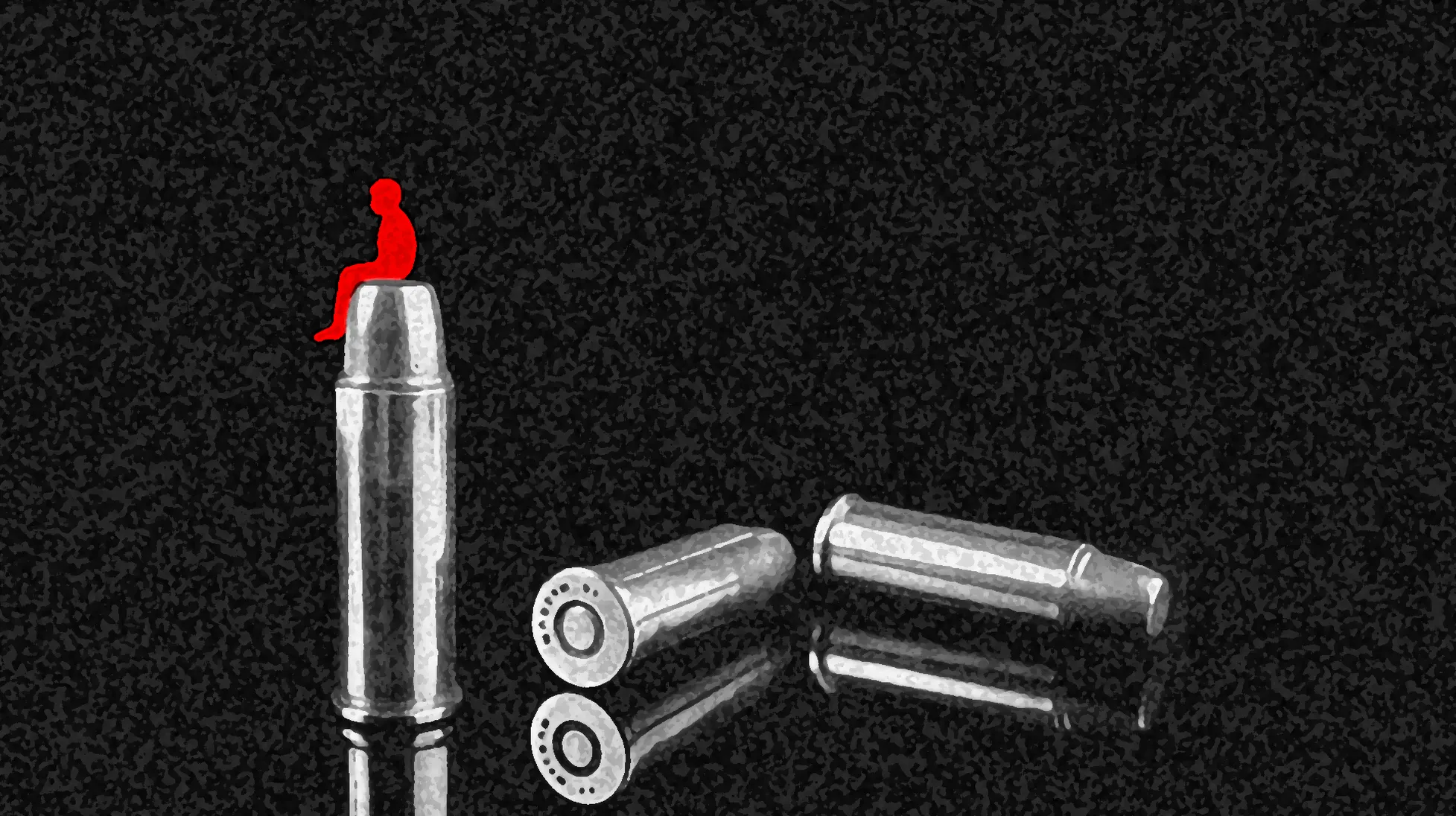
Days pass slowly in the drug den. The three of them have been there for over a month, each with a different reason, or a different ability to understand why.
They are 6, 9, and 16 years old. Different levels of comprehension. One mother, imprisoned for street-level drug dealing. A bond between siblings that may mark a turning point in their lives. Or maybe not. Maybe it's just another chapter in what they've already endured. What’s clear is they are now confined to that house in Pinar Norte, unable to leave. They are the “guarantee.” As long as they’re there, mom is less likely to talk from behind bars. While they stay, others are protected.
Everyone in the den is a stranger. No family, no friendly faces. The “caretaker” is anything but. No schooling, no medical checkups, no right to simply be their age. Sometimes they keep watch. Sometimes they clean. The two youngest have already missed 90 days of school this year. The 16-year-old left her NGO workshops long ago.
What does their father think? He doesn’t have custody. When he asked about them, he was told they were staying with “a friend” of their mother. What about their grandmother? She’s active—visiting her jailed daughter, learning about the situation. She files a police report, saying her grandchildren are virtually imprisoned in a nearby drug den. Everyone starts moving. The mother writes a letter from prison, granting custody to the grandmother. Eventually, the matter is settled as these matters often are: through an off-the-books agreement, bypassing the formal justice system. A family lawyer coordinates with the children's public defender. It's 2023. A police patrol raids the house. The three siblings are rescued. It's a kind of ending—at least for this paragraph.
***
So much happens beneath the headlines. Different words are used: “sacrifice,” “sale.”
Nine years ago, two parents, both extreme-poverty-stricken and addicted to base paste, gave their eldest daughter to a drug den—for money, and in return for her help maintaining the “business.” One less mouth to feed—the teenager was the oldest of five—and a gesture of goodwill toward their dealers. Shortly after, she became pregnant by one of the den’s owners. She was 13.
***
In a central Montevideo neighborhood, a drug den’s workforce is made up of children.
For over a decade, the method stayed the same—until this year: the man partners with a woman and puts her children to work. He had three kids with his first partner—they worked. When she was jailed for drug dealing, he found another partner, who had four children—they worked. When she, too, was imprisoned, he took up with a third woman, this time with two children—and yes, they worked too. When the third woman was arrested for the same crime—so far, the roster has remained stable.
What roles do children play in a drug den? Preschoolers play in the street, watching for suspicious activity. School-age kids act as mules—carrying drugs in their Pokémon backpacks—while an adult sells en route, outside the school or along the street. Teen girls usually run the household and care for the younger ones. All this happens amid a backdrop of weapons, drugs, threats, shouting, and the daily sight of blood on the floor. A way of life that takes root early—and leaves scars.
In Uruguay, violence now reaches children in increasingly slippery, hard-to-spot ways—often escaping the front pages. It happens both on the surface and just beneath the skin. It always did, but now it happens more often, with shorter intervals and greater brutality. The growing influence of drug trafficking and its culture in peripheral (and not-so-peripheral) neighborhoods deepens the issue. Yet, as is often the case, outrage only flares when a child’s body lies in the street—or dies on an operating table.
Sources for this investigation—including field organizations, pediatric surgeons, school authorities, the Victim’s Unit of the Prosecutor’s Office, INAU data, and academic studies—paint strikingly similar scenes. Their stories seem rehearsed, as if to deliver a unified response to what it means for some children in Uruguay to grow up abandoned. But they aren’t rehearsed—just repeatedly confirmed.
One recurring image: children bringing talcum powder to school—like last year in Casavalle—setting up imaginary drug dens during recess, “defending their turf” from pretend rivals until the bell rings.
Another: nine- or ten-year-olds carrying guns and letting others know. Former classmates, ex-friends, looking up at them—longing for the power they wield, their 9mm Glock tucked into their waistband. Dreaming of one day tasting that “safety.”
Another: mornings when the “dogs” (the lowest ranks in the narco structure) sleep in, and school opens in relative peace. Mornings when kids step over bullet casings from the night before. One such morning, they collected 345 shells in a single sweep near Ana Frank Public School in Cerro Norte.
Another: families who vanish. When teachers ask why a student has so many absences, there's no one to ask—the family has disappeared. They fled. Or were forced to.
Guarantees. Drug mules. Forced relocations. Daily exposure to firearms. Constant proximity to addiction and deepening poverty. These are the untelevised realities making the problem more structural, inherited, and harder to solve.
For Fernando Olivera, director of the civil association Cippus, many of these situations are “coded messages,” tools to instill a new law that no one dares question. “They create conditions of impunity. Fear silences complaints. There are no witnesses—everything happens fast. Kids are used because demand meets supply. These conditions begin in more powerful environments and trickle down to neighborhoods. The poor bury the dead. They handle thousands of dollars in weapons supplied by people from elsewhere,” he explains.
And so, the pressure builds—then bursts. Violence becomes real—a bullet whistling through the air. That’s when it hits the headlines. That’s the risk of living so close to the fire: thinking only others get burned, until it’s too late.
***
Shooting in Marconi. She is nine years old, playing in the street, and is hit by two bullets.
Christmas Eve in Peñarol. She is fourteen, and a stray bullet kills her before Christmas.
Gang clash in Malvín Norte, crossfire. He is eight. He dies.
Pinar Norte, three different ages, the same attack: two, five, and eight years old get out of a car; all of them are shot; the one who dies is the youngest.
Punta de Rieles, shooting. Age: eleven months. The bullet enters through the back and remains lodged inside.
Shooting at a house in Maracaná. Several die. He dies, eleven years old.
One year old, in Cerro Norte. Two 5.56-caliber bullets pierce the chest; another shot ends up in the right buttock. He dies.
In Plácido Ellauri, the pickup game ends, the soccer ends, they head home together, shots ring out, and he—thirteen years old—dies. The other five, younger: shot, but alive.
It could go on. The eight cases above, all occurring between 2023 and 2025, are just that: eight cases, nothing more. But the data—and the bullets—are abundant.
***
It’s December in Cerro Norte. Summer presses against the walls of the Ana Frank school. The sluggishness and lack of response should be signals of normalcy in this heat. But that’s not how things work here: the state of alert does not relent. Not even when the students themselves can’t identify it for what it is.
Someone brings a firecracker to class. A little old lady’s fart, as they call it. Nothing too loud—something almost innocent, euphemistic, like the phrase itself. The explosive goes off in the schoolyard during recess. What should have happened: surprise, a teacher’s scolding, a forgettable moment, the day moving on and ending. What actually happens: widespread panic. Some students already know what to do; others are pulled along by the teachers, who herd them into the classrooms. They stampede in, hide under the desks where they should be learning their multiplication tables and reading Jungle Tales. They follow a protocol designed for when there's a shooting—a regulatory framework that’s becoming too frequent in parts of Montevideo, especially in this neighborhood. And suddenly no one remembers the heat, there are no slow movements, no complaints about early summer. Everyone is yanked out of the end-of-year daze by the alarm. There’s no lethargy when fear runs intramuscularly and dictates how one must live. And what to expect.
Growing Up with Violence
Living in constant alert has consequences. A hostile environment ends up affecting biology—and more so in children still developing. The amygdala, a subcortical structure in the brain about the size of an almond, becomes hyperactive. It’s the area where emotions are processed—fear and anger among them. And it’s a problem when those are the only emotions available to process.
Violent crimes are also linked to increased biological markers of stress. For example, telomeres—special DNA sequences at the ends of chromosomes—tend to be shorter when stress is ongoing.
“Children and adolescents these days are immersed in criminal dynamics because they’re part of families involved in crime, or they live in neighborhoods where they witness such events and therefore become victims too,” says Mariela Solari, director of the Victims and Witnesses Unit at the National Prosecutor’s Office.
“They’re being raised and educated in cruelty, witnessing acts of extreme violence against loved ones or neighbors. They grow up in environments filled with tension and violence, training them to remain in a constant state of alert just to survive. This leaves them exposed and vulnerable to all forms of violence. Their childhoods are broken. They can be repaired, but it could also be prevented.”
Uruguayan researcher Hernán Delgado, in his doctoral thesis in Biological Sciences, found that children from poorer households (which tend to experience more violence) show increased heart rates during decision-making moments—when heart rates should actually slow. Even during sleep, their heartbeats remain elevated, likely linked to a sense of imminent threat.
The theories are still under discussion, but the symptoms are clear. For instance, evidence shows that children exposed to violence have less concentration in class. One interpretation focuses on impairment, or "atrophy." But another suggests that these children, because of their need to stay alert, become adept at quickly shifting their attention (they’re good at reacting to multiple stimuli). Delgado summarizes it this way: “If you live in an environment full of threats, it helps to be good at detecting them.”
The Giraluna alternative education center has worked for decades in Nuevo París and also serves children from the 19 de Abril settlement, heavily impacted by narco influence. Fieldwork exposes educators to complex realities, and the possibility that one of “their kids” might end up dead years after attending the center is something they’ve learned to live with—because dire situations often lead to abrupt endings. Yet, they say such cases used to be rare. Now, that last word—rare—is losing its place.
That’s why the institution uses various tactics to lower the emotional noise and ensure that, at least inside, stressors are minimal. Before lunch, for example, the cafeteria speaker plays calming guitar music, helping the kids grow quiet, focus, and then eat—peacefully, if only for a while.
“Children are on alert all the time,” says Ana Campoleoni, who has been with Giraluna for decades and has watched generations pass through. “They don’t know what will happen to them. They wake up to shouting. It’s a constant state of unrest. They say there are shootings every night. Every single night. That’s not an exaggeration. And they say that when things get tense around six or seven in the evening, the night will be fatal. The term they use is they go overboard.”
Fear, then, is a driving force rooted in a rising tide of violence, the encroachment of organized crime into Montevideo’s outskirts, a “shift in the value of life,” the breakdown of once-recognized codes. But also, there’s the sense that violence is no longer across some threshold—it’s inherited, whether one wants it or not. It’s just part of life now.
For John Díaz, from the Minga project in Las Piedras, the last 15 years have highlighted the “fear and culture of impunity” in the youth who come to them. Stories of blood, bullets, and death are daily fare.
“Twelve- or thirteen-year-olds come in talking about how someone got shot in the head behind their house, how they saw it happen, heard the gunshot, and how if they say anything, they’ll be killed too. Or they talk about someone being set on fire, another getting an ear cut off, someone else shot in the leg. That a group from another neighborhood is coming to shoot them up. And later, we see the headlines confirming it,” he says. He adds another constant: weapons.
“They say, ‘They left me the gun; I have to take care of it, but it’s been used in robberies and maybe a killing too,’” says Díaz. These kids are younger and younger. And more guns mean more bullets—and more gunshot wounds.
While neighborhoods, institutions, and voices may vary, they all agree: this is one of the most striking changes in recent years. Before, a minor with a firearm usually meant they were already deep in the criminal system—baptized. Today, contact with guns is far more casual. They’re part of everyday family life from the earliest memories. Sometimes kids are tasked with hiding them during police raids; sometimes they handle them without hesitation. Holding a weapon is no longer a rite of passage. The gun isn’t brought into the home. There is no “first time.” It’s just there. At hand. In their hands.
***
On the last Sunday of October, Uruguayans were voting in national elections. At some point that day—amid ballot slips and photos of voter IDs flooding social media—a 14-year-old boy was shot in the spine. It didn’t make the news.
What did make the news was the crossfire that followed, in Nuevo Ellauri and Plácido Ellauri—two neighborhoods so small the National Statistics Institute doesn’t even classify them as such. Two minors were killed, and four others wounded. That made the broadcasts.
Nearby, in Jardines del Hipódromo, on October 17, an eight-year-old was shot. Bullets lodged in his chest and left arm. No headlines. Nor for the nine-year-old injured in Lavalleja, taken to Médica Uruguaya in August. Or the 12-year-old shot in Las Piedras this year and hospitalized at Pereira Rossell.
At least 46 children under 15 were shot in the last 14 months. Pediatric surgeons at Pereira Rossell say treating a gunshot child used to be rare. Now, they see at least one a month—minimum. They even follow protocols from Mexico and other countries more accustomed to the scourge of organized crime.
At the upcoming pediatric surgery congress in Punta del Este, set for November 2025, gunshot wounds in children will be a topic. A few years ago, that would’ve been unthinkable.
Beyond the numbers, the weapons have changed too. Gunshot injuries used to be from .22 caliber bullets, at most. Now, modified semi-automatic 9mm pistols can fire up to 18 rounds in one burst. An attack like that devastates a child’s body. The surgeons no longer have to imagine it—they see it on the operating table.
On January 5, in Nuevo Ellauri, a 22-year-old man was gunned down while holding his two-year-old daughter. The killers fled on a motorcycle. Several bullets struck Ámbar, the child. On the operating table, doctors found 15 wounds—two in her back. The spinal injuries mean she’ll likely be paraplegic for life. A little over a month ago, she was moved from intensive to intermediate care. The doctors say she’ll probably live, but they don’t know how to answer the real question: What happened to the rule that kids don’t get hurt?
No one knows exactly when the code broke. Giraluna staff think it was after the pandemic. Doctors at Pereira Rossell say around six years ago. Gradually, accidents, suicide attempts, and stray bullets have stopped being the main reasons minors get hurt. Now it’s about sending messages or retaliating against their families. Targeting children is currency. A message delivered.
Ámbar’s father, Rodrigo Nahuel Pintos Dorta, had over 30 police investigations on record, including the murder of a female police officer when he was 17—a crime for which he was incarcerated in the National Institute for Adolescent Social Inclusion (Inisa). His rap sheet was extensive, as were the social media posts flaunting his power: lavish birthday parties, a two-tiered cake made of money, a dollar-sign topper crafted in sugar.
As violence perpetuates, so do power dynamics and the need to flaunt status. Another factor drawing kids into the criminal world is how quickly it pays off—or seems to—especially through social media. It’s a fast track out of poverty, and it’s visible. On Instagram, TikTok, or even right there on their own street. Watching a brand-new BMW navigate the potholes of a shantytown is a powerful image. One that sticks.
The numbers are stark: one in six children in Uruguay lives in overcrowded housing. Among the poorest, it’s one in three. That hasn’t changed since at least 2013, when the National Survey on Nutrition, Child Development, and Health began tracking it. The same survey found that nearly one-third of children aged 2 to 4 experienced physical violence in the past month.
Meanwhile, the number of children and teens in the state’s special protection system rose 21% between 2020 and 2023. One of the leading reasons: poverty.
***
Campoleoni from Giraluna reminds us that poverty is a form of structural violence: “When there’s no food, when your dad is in prison and your mom wakes you with screams, when your only dream is to have what others have and you don’t.” That’s when the drive to feel part of something bigger kicks in. When the need for immediate gratification strengthens ties to the criminal world. And then, the cycle completes itself: the children who once went unnoticed now feel untouchable—and become the ones wielding violence.
But it starts much earlier. The moment things that shouldn’t happen, do. And worse, become normalized. What’s the tipping point? Maybe it’s when three siblings sit, hour after hour, in the filthy rooms of a drug den, waiting for news of their mother, waiting to be escorted by police to yet another temporary home, beginning to grasp—partly, but enough—that this is their life and it likely won’t change.
Or maybe it’s when a school-aged child understands that hearing gunshots is normal. That knowing the neighborhood is calmer in the morning is normal. That hiding under desks in class is just what you do. That shell casings can be collected. That the white powder is fake drugs, and territory must be defended during recess. That a gun isn’t a big deal—after all, it’s right there at home. That one day, the bullet that killed the neighbor might come for them too—random, targeted, or collateral. That blood alone, on the floor, isn’t dangerous. And that if something bad happens, well—better stay alert so it doesn’t.
Learn to live with fear. And survive it.
That’s the point. To avoid becoming the headline. And maybe that’s the tipping point. Or maybe not.
Names and specific details related to the events in this article have been withheld to protect the identity and safety of those involved.