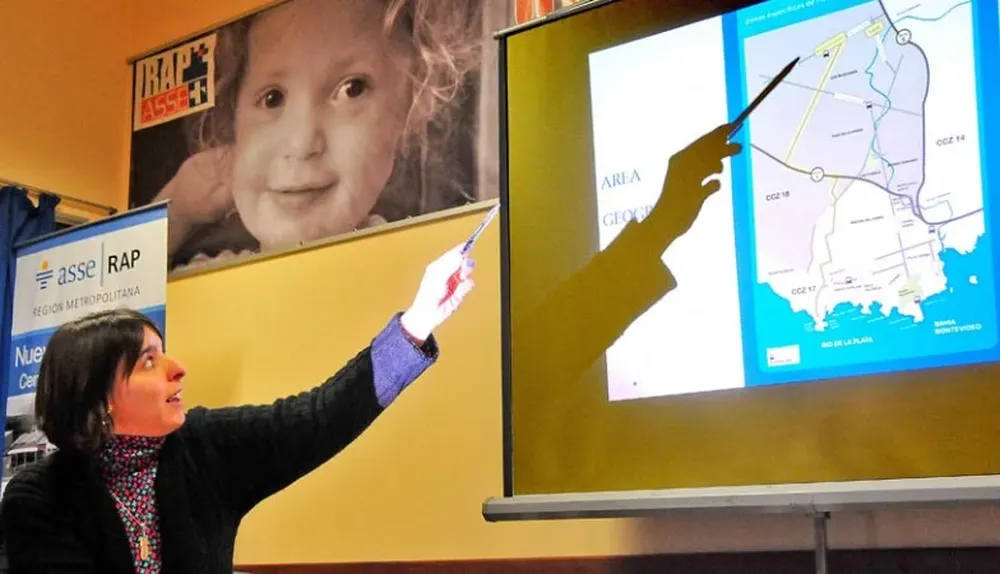
In Los Bulevares, close to Paso de la Arena, there are mothers who sell the virginity of their daughters. There are exploiters who sexually abuse of girls, boys and disabled teenagers. Cerro´s bus terminal is a focus of child sexual exploitation. Thousands of spooky accounts were brought up by the research carried out in the West of Montevideo by the National Committee of Commercial Sexual Exploitation Eradication (Conapees), a state body made up by several ministries and non-governmental organizations.
According to Conapees research, the scenario is almost perfect for this phenomenon to become reproduced and the crime to go unnoticed. The illegal aspect is mentioned in most of the interviews. Many of the daily practices coexist with such illegality, which ends up naturalizing the crimes. Drugs, insecurity, police corruption and work informality constitute a scenario in which crime is an everyday phenomenon.
Interviewees consider that the scarce resources from the Police prevent them from coping with all crimes in the area, so sexual exploitation complaints are left aside.
A neighbour narrated threats of policemen when they tried to report exploitation cases. But those threats are usually undercover. “It is not good to get into that business,” warned some officers to a neighbour who presented several reports.
“We don´t have guarantees as accusers,” complaint an educator on the meeting with the researchers. A neighbour from Santa Catalina said that “it is difficult to report if you live on the area”.
Researchers believe that fear explains the lack of reports, as it is hard to undertake the role of accuser, its social negative connotation and the fear of reprisal.
Alert Signals
Luis Purtscher, Conapees´ President, mentioned some signals that should be considered alarming. He warned that “it is not normal that a 14-year-old girl goes to live with a man who is 40”. “This should not be considered natural,” he added.
It happens once and again; economic agreements with adult men, who pretend to be the boyfriends as well as pregnancies as an opportunity to run away from home where there is intrafamiliar violence. This also explains the high teen pregnancy rate in the West.
“Owners of drug selling locations are the most sough-after,” said one of the members of Conapees.
To the Crash
This phenomenon which remained undercover for ages is now starting to appear. However, there are still more questions than answers. “We know this exists, so what are we going to do now?” asked a local woman in the meeting.
Joaquín, a young man who works as educator in an NGO of the area, said that “there is no general consent on how to approach the situation” and, in that sense, he asked for a “route-map”.
Purtscher then suggested to design a device of personalized attention for the area and to carry out campaigns targeted from the Western zone of Montevideo.
Conapees team stated the importance of working together with girls, boys and teenagers to create the strategy to approach the problem.
Moreover, they also proposed to work on raising awareness and training together with transportation companies and workers who operate in the area as some exploiters or facilitators are drivers.
Although there was huge improvement in the last 10 years, when Conapees was created, specialists were quite pessimistic. “Montevideo has not burst yet because of a matter of scale. When Montevideo bursts, we will see if institutionality counts. We think it won´t happen,” said the president of Conapees.
Lea la versión en español aquí.